
How to Start a Gym Business: Practical Plan & Costs for 2025
Target audience: gym owners, fitness studio managers, franchise operators. This guide walks you step-by-step through how to start a gym business, from writing a gym and fitness center business plan to opening the doors and scaling revenue — with pragmatic operational advice and real-world tools you can adopt today.

Kartikey Mishra
Business
Dec 29, 2025
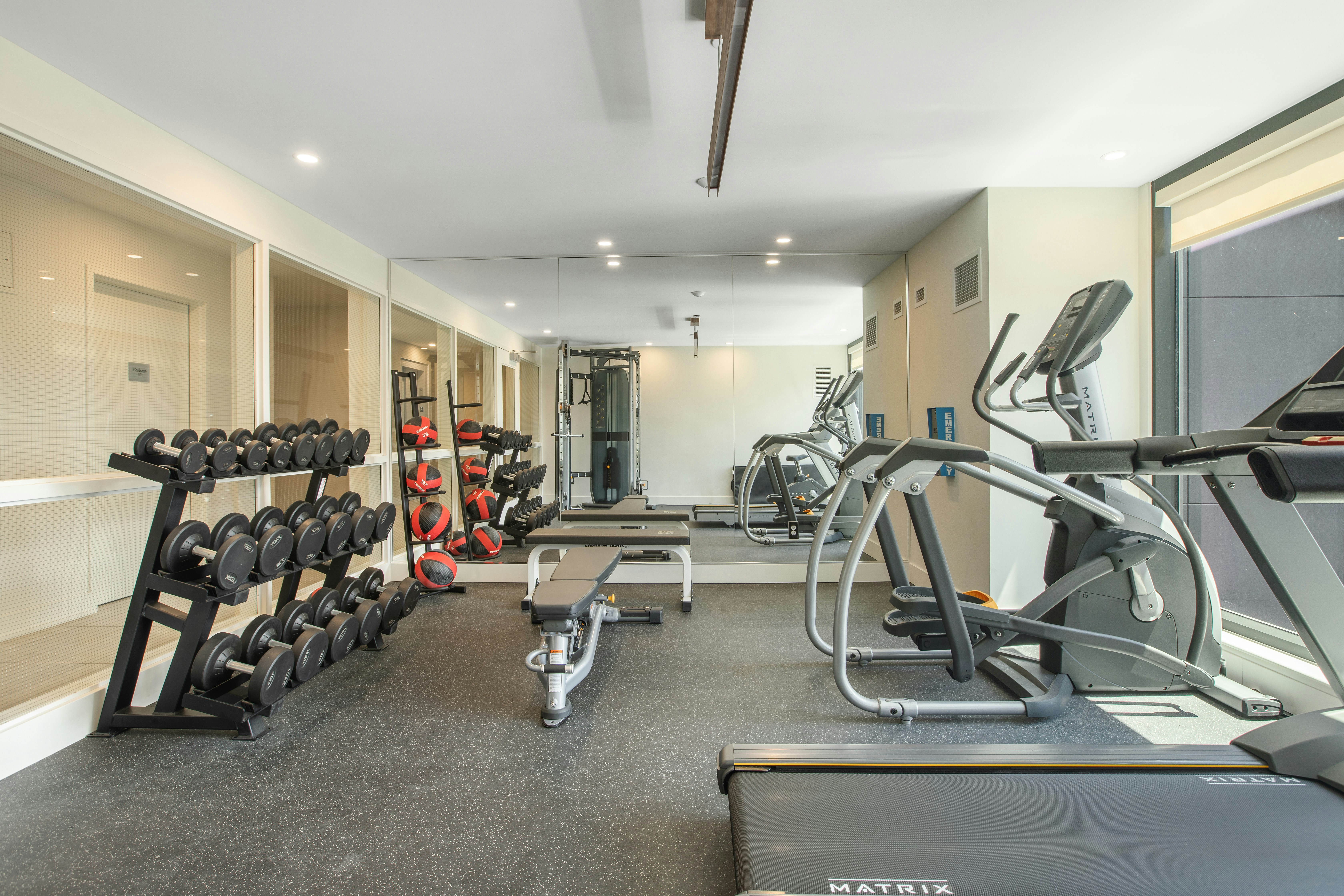
How to Start a Gym Business: Practical Plan & Costs for 2026
The global gym and fitness industry crossed $96 billion in 2025 and is still growing. But roughly 80% of new gyms that fail do so in the first 18 months — not because the market is bad, but because the owner ran out of cash, picked a bad lease, or had no system for turning walk-ins into paying members.
This guide covers everything you actually need to open a gym: what it costs, how to structure the business, where to find money, and how to avoid the mistakes that kill most first-time gym owners before their second anniversary.
Why open a gym now (2025-2026 market context)
The fitness industry has been growing steadily since the post-pandemic recovery, and 2026 is shaping up as one of the strongest years to enter. A few trends are driving this:
Boutique is eating big-box. Smaller, specialized studios (cycling, HIIT, yoga, strength training) have grown 15-20% year over year since 2022. Members pay more per visit and churn less when they feel part of a community. You don't need 20,000 square feet and 200 treadmills to compete anymore.
Hybrid models are now standard. Gyms that added online classes during COVID kept those revenue streams and refined them. A 2,000 sq ft studio that also sells on-demand workouts can serve 3x the members of its physical capacity.
Technology costs dropped. Gym management software, access control hardware, and payment processing all got cheaper and easier to set up. Five years ago, running a 24/7 unmanned gym required custom engineering. Now it's off the shelf.
Membership numbers keep climbing. Gym memberships in the U.S. surpassed 75 million in 2025 (IHRSA), up from 64.2 million in 2019. People want to work out in person — they just want better experiences than what the old model offered.
None of this guarantees your gym will succeed. But the market conditions heading into 2026 are the most favorable they've been in a decade for new operators.
Overview: key steps to start a gym business
Here's the full sequence from idea to opening day. Each step has its own section below.
Write a gym business plan (financials, target market, competitive positioning)
Get trained and certified
Calculate startup costs and ongoing expenses
Understand how gyms make money (revenue model)
Set your pricing strategy
Pick a business structure and register
Get tax IDs and open business accounts
Find your location and plan the build-out
Handle licenses, permits, and insurance
Secure financing
Build your marketing and sales engine
Set up operations and technology
Execute a 90-day launch plan
Track the metrics that matter
Write your gym and fitness center business plan
Your business plan isn't a school assignment. It's the document you'll hand to lenders, landlords, and potential partners. Skip the 40-page template. Focus on the parts that actually matter:
Executive summary. One page. What kind of gym, where, who it's for, how much money you need, and when you expect to break even.
Market analysis. Who are your target members? What gyms already exist within a 15-minute drive? What are they charging? Where are they weak? Don't guess — visit them, check their Google reviews, count cars in the parking lot at peak hours.
Business model. How will you make money? Monthly memberships alone rarely work. Model out personal training revenue, class packages, retail, and any digital offerings.
Financial projections. At minimum: 3-year P&L, monthly cash flow for year 1, startup cost breakdown, and break-even analysis. Be conservative. If your plan only works at 90% capacity, it doesn't work.
Operations plan. Staffing model, hours of operation, class schedule framework, equipment list with costs, and technology stack.
Marketing plan. How you'll get your first 100 members. Pre-sale strategy, grand opening plan, ongoing acquisition channels, and retention tactics.
A gym business plan that investors and lenders take seriously usually runs 15-25 pages. Include appendices for equipment quotes, lease terms, and contractor estimates.
Get trained and accredited
You don't need a certification to own a gym, but you need credibility. Members, insurers, and landlords all look for it.
For gym owners who will also train clients:
ACE (American Council on Exercise) — general fitness
NASM (National Academy of Sports Medicine) — corrective exercise, performance
NSCA (National Strength and Conditioning Association) — strength, sports performance
ISSA (International Sports Sciences Association) — flexible online study
For gym owners who won't train clients directly:
Consider a business management certification (ACE offers a fitness business certificate)
CPR/AED/First Aid certification is still expected — you're running a facility where people exert themselves
For your staff:
Require at least one nationally accredited certification from all trainers
Verify certifications are current (most expire every 2 years)
Group fitness instructors should hold format-specific certifications (Les Mills, Zumba, yoga alliance, etc.)
Budget $500-2,000 per person for initial certifications, plus $200-500/year for renewals and continuing education.
Understand startup costs
Startup costs vary wildly depending on whether you're opening a 1,500 sq ft yoga studio or a 15,000 sq ft full-service gym. Here are realistic ranges:
Cost Category | Boutique Studio | Mid-Size Gym | Full-Service Gym |
|---|---|---|---|
Lease deposit + first/last month | $5,000-15,000 | $15,000-40,000 | $30,000-75,000 |
Build-out and renovation | $10,000-40,000 | $50,000-150,000 | $100,000-300,000 |
Equipment | $10,000-30,000 | $50,000-150,000 | $100,000-300,000 |
Technology (software, access, POS) | $1,000-3,000 | $3,000-8,000 | $5,000-15,000 |
Branding, signage, marketing | $2,000-5,000 | $5,000-15,000 | $10,000-30,000 |
Insurance (first year) | $2,000-4,000 | $4,000-8,000 | $6,000-15,000 |
Licenses and permits | $500-2,000 | $1,000-3,000 | $2,000-5,000 |
Working capital (3-6 months) | $10,000-30,000 | $30,000-80,000 | $50,000-150,000 |
Total Range | $40,500-129,000 | $158,000-454,000 | $303,000-890,000 |
These numbers are U.S. averages. Costs in major metros (NYC, LA, SF) can run 50-100% higher. Secondary markets and suburban locations are typically on the lower end.
Where most new gym owners underestimate costs:
Build-out takes longer than expected — budget for 2 extra months of rent before you open
HVAC upgrades for high-occupancy spaces (code often requires it)
Sound insulation (your neighbors will complain about dropped weights)
ADA compliance for restrooms and entrances
Working capital — your gym won't hit break-even for 6-12 months
Assess ongoing expenses
Once you're open, these are the monthly costs you need to cover before you earn a dollar of profit:
Rent: Typically 15-25% of revenue for a healthy gym. If rent is eating more than 30%, you either need more members or a cheaper lease.
Payroll: Usually the biggest line item — 30-45% of revenue. Includes front desk staff, trainers, cleaning, and management. For a small studio, you might start with 2-3 part-time staff and yourself.
Utilities: Gyms use a lot of electricity (lights, HVAC, equipment). Expect $1,500-5,000/month depending on size and climate.
Equipment maintenance: Budget 5-10% of your original equipment cost per year. Treadmill belts, cable replacements, and upholstery repairs add up fast.
Insurance: $200-800/month depending on coverage levels and location.
Software subscriptions: Gym management, payment processing, marketing tools, accounting. Plan for $200-500/month.
Marketing: 5-10% of revenue for a new gym. Once you're established, 3-5% is typical.
Miscellaneous: Cleaning supplies, towels, water, music licensing (yes, you need it), and the random things that break.
Track monthly recurring revenue (MRR) and revenue per member. These two numbers tell you whether the business is healthy or bleeding. A gym with 300 members paying $50/month that nets $15,000 in revenue has very different economics than one with 150 members at $100/month that nets the same amount but with lower overhead.
How gyms make money — revenue streams you should model
Membership dues are the foundation, but gyms that depend solely on monthly memberships are fragile. Here's how to diversify:
Monthly memberships (40-60% of revenue). Your core. Tiered pricing (basic access, premium with classes, VIP with personal training) lets you capture different willingness-to-pay levels.
Personal training (15-30% of revenue). Sold as packages (e.g., 10 sessions for $500). Your trainers either take a percentage (40-60%) or earn a base salary plus commissions. This is high-margin if you manage trainer utilization well.
Group classes and specialty programs (5-15% of revenue). Bootcamps, yoga series, nutrition challenges. Can be included in premium memberships or sold separately.
Retail and supplements (5-10% of revenue). Protein shakes, branded merchandise, equipment. Low overhead if you keep inventory lean.
Digital offerings (emerging). On-demand workout libraries, virtual training, app-based challenges. Low marginal cost once you create the content.
Facility rentals and corporate partnerships. Rent space for events, partner with nearby companies for employee wellness programs, or host youth sports training.
Day passes and drop-ins. Smaller revenue stream but useful for tourist areas and business districts.
Model each revenue stream separately in your business plan. Know your gross margin on each. Personal training might generate $20K/month in revenue but cost $12K in trainer compensation — your actual contribution is $8K.
Come up with a pricing strategy
Pricing is where most gym owners either leave money on the table or scare people away. A few principles:
Anchor high, offer options. If your premium membership is $149/month and your basic is $49/month, most people pick the middle tier ($89-99). Without that high anchor, they compare your $49 to Planet Fitness's $10 and you lose.
Common pricing structures:
Basic access: $29-59/month
Standard (access + group classes): $59-99/month
Premium (everything + PT sessions): $99-199/month
Personal training packages: $50-100/session
Class packs: $15-25/class or 10-class packs at a discount
Trial offers that convert. A free week or a $1 trial gets people in the door, but you need a follow-up system to convert them. Track your trial-to-paid conversion rate. If it's below 30%, your onboarding process has a problem.
Annual vs. monthly. Annual commitments give you cash flow predictability and lower churn. Offer a 10-20% discount for annual prepay. But don't force it — some members won't commit long term and a monthly option keeps them from walking away entirely.
Avoid a race to the bottom. If you compete on price, you'll attract members who leave the moment something cheaper opens nearby. Compete on experience, community, and results instead.
Track two KPIs religiously: trial-to-paid conversion rate and member lifetime value (LTV). These tell you whether your pricing and retention work together.
Pick a business structure and register
This is paperwork, but it matters for taxes and liability:
Sole proprietorship. Simplest to set up, but your personal assets are exposed if someone gets injured. Not recommended for a gym.
LLC (Limited Liability Company). Most common for small gyms. Separates personal and business liability. Pass-through taxation (no double tax). Formation costs $50-500 depending on the state.
S-Corp or C-Corp. Makes sense once you're profitable enough to benefit from corporate tax structure, or if you're raising outside investment. More paperwork and compliance requirements.
Partnership. If you're opening with a partner, get an operating agreement drafted by a lawyer. Spell out ownership percentages, responsibilities, exit terms, and decision-making authority. Partnerships without written agreements end badly.
Steps to register:
Choose your business name (check availability with your state's Secretary of State)
Register the entity (LLC, Corp, etc.)
File for a DBA (Doing Business As) if your gym name differs from your legal entity name
If you form an LLC or corporation in the U.S., file a Beneficial Ownership Information (BOI) report with FinCEN (required since 2024, still in effect for 2026)
Budget $500-2,000 for legal and filing fees. A business attorney can handle everything in a week.
Get tax IDs and open business accounts
Federal EIN (Employer Identification Number). Free from the IRS. Apply online at irs.gov — takes 5 minutes. You need this before you can open a business bank account or hire anyone.
State tax IDs. Most states require separate registration for sales tax, state income tax withholding, and unemployment insurance. Check your state's Department of Revenue website.
Business bank account. Open a dedicated checking and savings account. Don't commingle personal and business funds — this can pierce your LLC's liability protection if you ever face a lawsuit.
Business credit card. Use it for all gym expenses. This builds your business credit score (separate from personal credit), which matters when you apply for equipment financing or a line of credit later.
Accounting setup. Use QuickBooks, Xero, or Wave from day one. Categorize every transaction. Hire a bookkeeper ($200-500/month) or use software integrations to automate the work. Bad bookkeeping is the second most common reason new gyms fail (after undercapitalization).
Find the right location and fit-out
Location is the decision that's hardest to undo. A bad lease can sink a good business.
What to look for:
Visibility. Street-level with signage rights beats a second-floor suite in a strip mall. Walk-in traffic still matters.
Parking. Members who can't park easily won't come. Check peak-hour availability, not just total spaces.
Demographics. Is your target member within a 10-15 minute drive? Use census data and Google Maps to check population density, household income, and age distribution.
Competition proximity. Being next to a Planet Fitness isn't automatically bad — they serve a different market. Being next to a gym that's identical to yours is a problem.
Lease terms. Push for a 3-5 year lease with renewal options. Negotiate a buildout allowance (landlords often contribute $10-50/sq ft for tenant improvements). Get exclusivity clauses so the landlord can't lease to another gym in the same center.
Fit-out priorities:
Member flow. Front desk → warm-up area → main floor → stretching/cool-down. Members shouldn't have to walk through a weight room to reach the cardio section.
Flooring. Rubber flooring for free weights ($3-8/sq ft), hardwood or synthetic for group fitness ($5-12/sq ft). This isn't where you cut corners — bad flooring means equipment damage and injury liability.
HVAC. Gyms generate enormous heat and moisture. Your HVAC system needs to handle 50+ people working out simultaneously in a small space. Budget $15,000-40,000 for a properly sized system.
Bathrooms and showers. More than you think you need. Members who shower at your gym stay longer and visit more often.
Sound. Rubber mats under platforms, sound insulation in walls if you share a building. One noise complaint can cost you your lease.
Licenses, permits and insurance
Requirements vary by state and city, but here's what to expect:
Permits and licenses:
Business operating license (city/county level)
Zoning clearance — confirm your space is zoned for fitness/recreation
Building permits for any renovation (electrical, plumbing, structural)
Certificate of Occupancy after build-out inspection
Sales tax permit if you sell retail, supplements, or taxable services
Health club registration or surety bond (required in some states — California, New York, and others require bonds to protect prepaid memberships)
Music license from ASCAP, BMI, and/or SESAC for background music
Insurance (you need all of these):
General liability — covers slip-and-fall, equipment injury, property damage. Minimum $1M per occurrence. Costs $1,000-3,000/year for a small gym.
Commercial property — covers your equipment, fixtures, and build-out. Essential if you don't own the building.
Professional liability (E&O) — covers claims from training advice that causes injury. Required if your staff provides any coaching or programming.
Workers' compensation — legally required in most states if you have employees. Covers employee injuries on the job.
Equipment breakdown — covers repair or replacement when equipment fails (not covered by general liability).
Business interruption — optional but smart. Covers lost income if a fire, flood, or other event forces you to close temporarily.
Total insurance costs: $3,000-12,000/year depending on gym size, location, and coverage levels.
Financing your gym
Most gym owners use a mix of sources:
Personal savings. The most common starting point. Lenders typically want to see you investing 10-30% of the total project cost from personal funds.
SBA loans. The SBA 7(a) loan is the most popular for gym startups. Up to $5M, 10-25 year terms, rates around Prime + 2-3%. Requires a solid business plan and personal guarantee. Processing takes 30-90 days.
Bank loans and lines of credit. Harder to get without a track record. A line of credit ($25,000-100,000) is useful for managing cash flow fluctuations and unexpected equipment repairs.
Equipment financing. Lenders that specialize in gym equipment (e.g., equipment manufacturers' financing arms) will finance 80-100% of equipment cost with the equipment as collateral. Terms are typically 3-7 years.
Franchise financing. If you're opening a franchise (Anytime Fitness, F45, etc.), the franchisor often has preferred lenders and financing programs.
Investors or partners. Giving up equity for capital. Make sure you have a clear operating agreement and exit terms. Don't take money from friends and family without a written agreement — it always ends badly otherwise.
What lenders want to see:
Your gym business plan with financial projections
Personal financial statement and credit score (680+ preferred)
Collateral (equipment, personal property)
Industry experience or certifications
3-6 months of cash reserves after the loan funds
Market your gym business — acquisition and retention
Marketing for a gym happens in two phases: pre-opening (to hit the ground running with members) and ongoing (to sustain growth and keep members).
Pre-opening marketing (8-12 weeks before launch)
Pre-sale memberships. Offer a "founding member" rate that's 20-30% below your regular pricing. This accomplishes two things: cash flow before you open, and members who are invested before day one. Target 50-100 pre-sale members for a boutique studio, 200+ for a larger gym.
Local partnerships. Partner with nearby businesses for cross-promotion — cafes, physical therapy clinics, corporate offices, apartment complexes. Offer their employees or residents a free week trial.
Social media build-up. Post construction progress, staff introductions, and "coming soon" content. Run local Facebook/Instagram ads targeting your zip code. Budget $500-1,500 for pre-opening social ads.
Grand opening event. Free workout classes, local vendor booths, giveaways. Invite local media and fitness influencers. This is a one-time chance to create buzz.
Ongoing marketing
Google Business Profile. This is your most important free marketing tool. Complete every field, upload photos regularly, respond to every review (positive and negative), and post weekly updates. Most gym members start with a Google search like "gym near me."
Website with online booking. Your website should let someone book a trial class, see your schedule, and sign up for a membership without calling or visiting. No phone number required.
Referral program. Offer existing members a free month (or a gift card, or a branded item) for every member they refer who signs up. Word of mouth is the cheapest and highest-converting acquisition channel for gyms.
Email and SMS campaigns. Automate follow-ups for trial members who haven't converted, birthday messages, and "we miss you" campaigns for members who haven't visited in 2+ weeks.
Content and SEO. Write about topics your target members search for — workout tips, nutrition basics, local fitness events. This builds organic traffic over time.
Retention > acquisition. Acquiring a new member costs 5-7x more than keeping an existing one. Focus on the member experience, community building, and consistent communication. Track your monthly churn rate — if more than 5% of members cancel each month, fix retention before spending more on marketing.
Operations, tech, and the role of PulseFit
Running a gym is an operations business. The owners who succeed aren't always the best trainers — they're the ones who build repeatable systems for the daily grind.
Lead and sales workflows
Every walk-in, phone call, and website form fill is a lead. Without a system, most of those leads get lost. You need a way to capture contact info, categorize prospects (hot, warm, cold), set follow-up reminders, and track how many convert to paying members.
PulseFit's lead management system does this automatically — it captures leads, assigns follow-up tasks to staff, sends automated sequences, and shows you conversion analytics so you know which channels are actually working.
Member communications and retention
Members who feel ignored cancel. Automated class reminders, birthday messages, and win-back campaigns for members who haven't visited in a while keep people engaged without requiring your front desk to remember everything.
PulseFit handles this through its communications module. Set up the campaigns once, and they run on their own — increasing check-in rates and lowering attrition.
Daily operations and task management
Opening checklists, equipment inspections, cleaning schedules, member issue follow-ups — these are the unglamorous tasks that make or break a gym's reputation. If your staff doesn't have a clear list of what to do each shift, things slip.
PulseFit's task dashboard gives every staff member a daily checklist. Issues get flagged in real time, and nothing gets lost between shift changes.
Membership, attendance, and analytics
You need to know: how many active members you have, who's showing up, which classes are full vs. empty, how much revenue each trainer generates, and where your MRR is trending. Without this data, you're guessing.
PulseFit consolidates subscription tracking, attendance heatmaps, trainer utilization, and revenue forecasting into one dashboard.
Integrations
Your gym tech stack will include a payment processor, accounting software, an email provider, and possibly access control hardware. These need to talk to each other. PulseFit connects with tools like Zapier and offers API access so you can sync payments, accounting, and communications without manual data entry.
Practical advice: Don't try to set up everything at once. Start with lead capture and member management in month one. Add communication automations in month two. Layer in analytics once you have enough data to act on.
90-day launch checklist
Days 1-30 (Planning and setup):
Finalize business plan and financial model
Form LLC/Corp and file BOI report
Obtain EIN and state tax IDs
Open business bank account and credit card
Secure lease and start build-out planning
Apply for business operating license and zoning clearance
Days 31-60 (Build-out and hiring):
Begin construction/renovation
Order equipment (allow 4-8 weeks for delivery)
Hire core staff — front desk, trainers, cleaning
Verify staff certifications
Set up insurance policies
Obtain remaining permits (building, sales tax, music license)
Set up gym management software — start with lead capture and member management
Build website with online booking and class schedule
Launch pre-sale memberships and founding member campaign
Days 61-90 (Soft launch and opening):
Complete build-out and pass final inspection
Obtain Certificate of Occupancy
Run soft launch with founding members, friends, and local partners
Test all systems — booking, payments, check-in, access control
Collect feedback and adjust schedules and staffing
Grand opening event
Begin weekly KPI tracking: check-in rates, trial conversions, MRR, churn
Key metrics to monitor (keep this on a dashboard)
Metric | What It Tells You | Target Range |
|---|---|---|
Monthly Recurring Revenue (MRR) | Financial health | Growing month over month |
Trial-to-paid conversion rate | Sales effectiveness | 30-50%+ |
Monthly churn rate | Retention health | Under 5% |
Check-in rate | Member engagement | 2-3 visits/week average |
Class capacity utilization | Scheduling efficiency | 70-85% |
Trainer utilization | Staff productivity | 60-80% of available hours |
Revenue per member | Pricing effectiveness | $50-100+/month |
Lead pipeline size | Marketing health | Stable or growing |
Time-to-conversion | Sales cycle speed | Under 7 days |
Review these weekly at minimum. PulseFit's revenue analytics and member management modules can pull most of these numbers into one view so you're not manually compiling data from five different systems.
Final steps — getting from plan to opening day
You've done the planning. Now execute:
Run a soft launch. Invite founding members, friends, local business partners, and a handful of fitness influencers to work out for free during your last week before opening. Test every system — booking, check-in, payments, class scheduling. Fix what breaks before the general public shows up.
Collect feedback aggressively. After the first two weeks, ask members what's working and what isn't. Class times, cleanliness, equipment layout, music volume — the small things matter more than you think.
Track daily, act weekly. Log your KPIs every day. Meet with your team weekly to review what's underperforming and make changes fast. The first 90 days set the tone for everything that follows.
Prioritize retention in months 2-6. Once you have 100+ members, shift your focus from acquisition to retention. It's cheaper to keep a member than to find a new one. Automate check-in reminders, follow up with absent members, and run a referral program.
Don't do everything manually. The gym owners who burn out are the ones doing every task themselves — membership tracking on spreadsheets, follow-up reminders on sticky notes, revenue calculations with a calculator. Set up systems from day one. That's what tools like PulseFit are built for — you configure the automations once and they run in the background while you focus on your members.
Frequently Asked Questions
How much money do I need to start a gym?
It depends on the format. A boutique studio (yoga, pilates, cycling) can open for $30,000-$150,000. A mid-size gym with a mix of cardio, weights, and classes typically costs $150,000-$450,000. A full-service facility with pools, saunas, and extensive equipment can exceed $500,000. Build a conservative budget in your business plan and include 3-6 months of operating cash as a buffer.
Do I need special licenses to open a gym?
Requirements vary by state and city. At minimum, expect a business operating license, zoning approval, and building permits for any renovations. Some states (California, New York, others) require health club registration and a surety bond to protect prepaid memberships. You also need general liability insurance, workers' compensation (if you have employees), and a music license for background playlists.
What gym software should I implement first?
Start with two things: a payment and booking system, and lead capture. These solve the most immediate problems — collecting money and converting walk-ins. PulseFit handles lead management, member management, and payment tracking from day one. Once you have steady traffic (usually month 2-3), add communication automations (class reminders, win-back campaigns) and analytics to track your KPIs.
How can I reduce member churn in the first year?
Focus on three areas: onboarding (make the first two weeks exceptional), communication (automated class reminders, birthday messages, "we miss you" texts for absent members), and community (group challenges, member events, social connections). Track check-in patterns — members who visit less than once a week are at high risk of canceling. The average gym has 30-50% annual churn. Getting below 5% monthly churn puts you well ahead.
How long until a new gym breaks even?
Most gyms take 6-12 months to reach break-even, assuming good location and marketing. Boutique studios with lower overhead can get there in 4-6 months if pre-sales go well. Larger facilities with higher fixed costs may take 12-18 months. The biggest variable is how quickly you build to your break-even member count — which comes down to marketing and sales conversion rates.
Should I buy a franchise or start an independent gym?
Franchises (Anytime Fitness, F45, Planet Fitness, etc.) give you a proven brand, systems, and franchisor support, but cost more upfront ($100,000-500,000+ in franchise fees) and take 5-10% of revenue in ongoing royalties. Independent gyms give you full creative control and keep all the revenue, but you build everything yourself. If you have industry experience and a clear vision, go independent. If you want a playbook and brand recognition, a franchise reduces risk.
Bottom Line
Starting a gym is a mix of financial planning, operational discipline, and relentless member focus. The market is there. The tools are affordable. The owners who fail are usually the ones who skip the business plan, underestimate costs, or never build a system for converting leads into long-term members.
Write the business plan. Be conservative with your numbers. Build your pre-sale list early. Set up systems for lead tracking and member communication from day one — PulseFit is free to start and covers those basics so you can focus on building a gym people actually want to come back to.